

How to Get Your Small Business on Podcasts (The Free PR Strategy Most Owners Ignore)
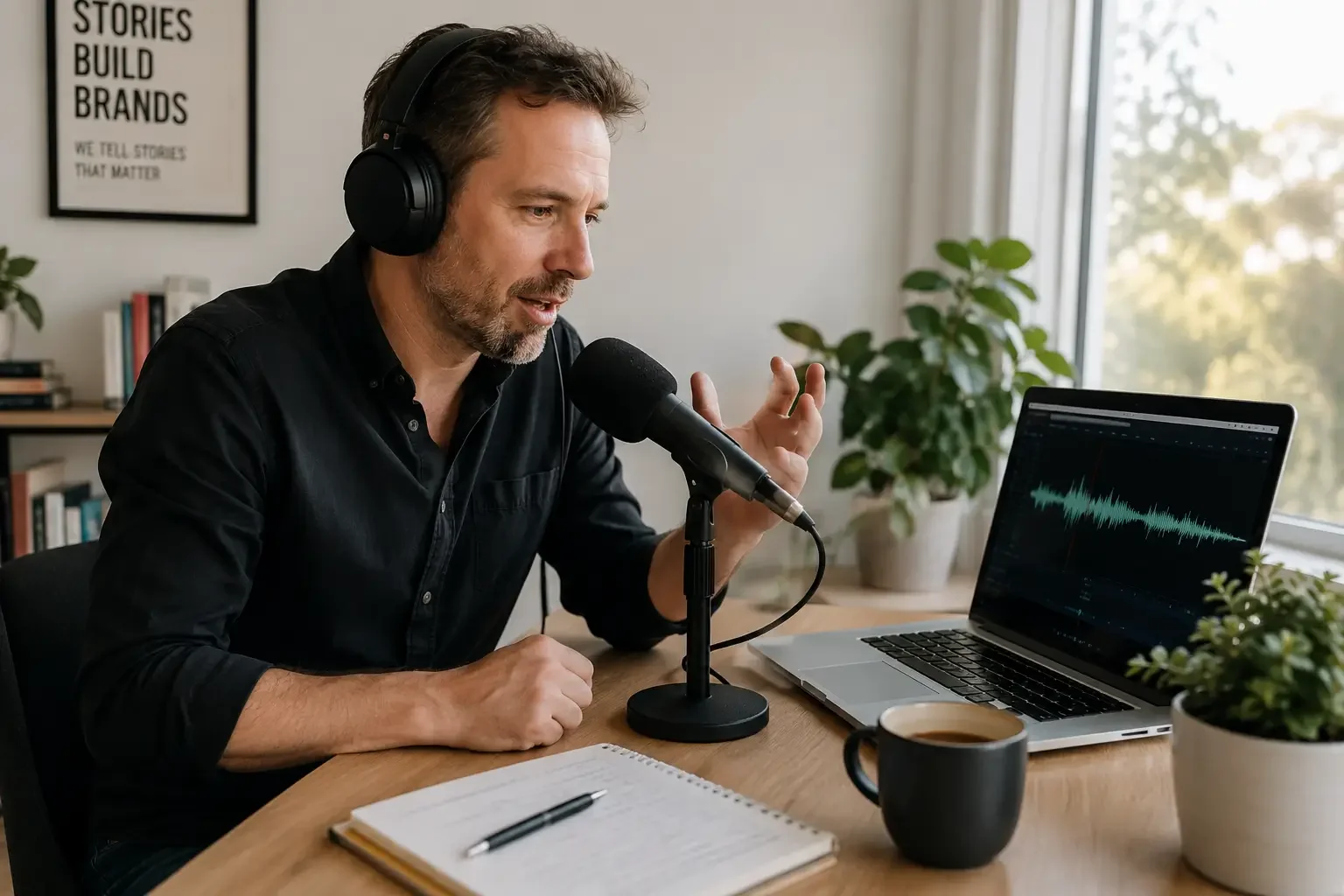
You've written the media pitches. You've responded to SourceBottle requests. You've posted on LinkedIn until your thumbs ached. And yet, getting sustained, credible media coverage still feels like running into a wall.
Here's a channel most small business owners overlook: podcast guest appearances.
There are more than four million podcasts globally, and Australia has one of the highest per-capita podcast listening rates in the world. Thousands of those shows actively need guests. Many of them serve exactly the audience you're trying to reach. And unlike a press release that disappears after 48 hours, a podcast episode stays indexed and searchable — sometimes for years.
The catch? Most small business owners either don't know where to start or write terrible pitch emails. This guide fixes both problems.
Why Podcast Appearances Work as PR (And What They Actually Deliver)
Let’s be direct about what you're actually getting here.
A podcast appearance is not a sales call. It's an extended credibility-building exercise — typically 20 to 60 minutes — where a host asks you questions in front of their audience. If you say something useful, people remember you. If you're boring or spend the whole episode talking about your business, they turn off.
What a well-placed podcast appearance can deliver: warm backlinks to your website (most show notes include links), fresh content you can repurpose, social proof ("as heard on..."), and genuine awareness among an already-engaged niche audience. That's not nothing for a business spending $0 on advertising.
What it won't deliver: instant leads, immediate revenue, or the kind of mass reach you'd get from a major newspaper feature. Podcast audiences tend to be small and loyal, which means you're playing a long game.
How to Find the Right Podcasts (Not Just Any Podcasts)
The instinct is to aim for the biggest shows. Resist it.
A 10,000-listener podcast in your exact niche — say, independent physiotherapists, or owners of boutique fitness studios — is more valuable than a 500,000-listener general business show where your segment will be forgotten by episode's end.
Start your search here:
Spotify and Apple Podcasts search (free): Type in your industry category plus words like "Australia," "small business," or your city. Scroll past the first five results — those are usually the oversaturated ones. Go for page two and three.
Listen Notes (listennotes.com, free tier available): A podcast search engine that lets you filter by language, country, and episode frequency. Useful for finding Australian shows that are still actively publishing.
Podmatch (podmatch.com, from USD $27/month): A marketplace that matches guests with hosts. Worth the cost if you're pitching consistently; overkill if you just want to try one or two shows.
Podchaser (podchaser.com, free tier): Lets you see episode ratings, listener estimates, and whether a show is actively updated. Avoid any podcast that hasn't published in three months — they're likely inactive.
Your shortlist should have 15-20 shows. You'll pitch maybe 8-10 of them. You'll get a yes from one or two on the first round. That's normal.
What Makes a Good Podcast Pitch (And What Gets You Deleted)
Podcast hosts receive more pitches than they can respond to. Most of those pitches are terrible.
The common mistakes: pitches that are three paragraphs about how great the guest is, pitches with no specific angle or topic suggestion, pitches that clearly haven't listened to the show, and — increasingly — AI-generated pitches that sound exactly like AI-generated pitches.
A strong pitch is short (under 200 words), shows you've actually listened, offers a specific topic the host's audience would benefit from, and makes booking easy.
Here's a prompt you can copy directly into Claude or ChatGPT to draft your first pitch:
"I want to pitch myself as a guest on a podcast. The podcast is called [NAME], hosted by [HOST], and it covers [TOPIC]. Its audience is mainly [AUDIENCE DESCRIPTION]. I've listened to [SPECIFIC EPISODE] and noticed they cover [RELEVANT THEME].
I'm a [YOUR ROLE] at [BUSINESS NAME]. My area of expertise is [SPECIFIC EXPERTISE]. Write me a short podcast pitch email (under 180 words) that: opens with something specific about their show, proposes 2-3 concrete topic angles their audience would find useful, briefly establishes my credibility, and ends with a simple call to action. Don't make it sound AI-generated. Don't start with 'I hope this finds you well.' Keep it direct and genuine."
Read what the AI produces. Then rewrite the opening line yourself and add one personal observation about the show that no AI could have generated. That's what makes the difference.
The Actual Workflow: From Research to Recorded (Time Breakdown)
This is what a realistic podcast pitching workflow looks like:
Step 1 — Build your target list (60-90 minutes total, one-off) Search Spotify, Apple, and Listen Notes. Screen each show for recent activity, audience fit, and whether they take guests. Add 15-20 to a simple spreadsheet with columns for: show name, host name, email/contact, recent episode you listened to, topics they cover, status.
Step 2 — Listen before you pitch (20 minutes per show) Pick one episode per show. You don't need to listen to the whole thing — 20 minutes is enough to understand their style, their audience, and what angles they haven't covered recently. Note something specific in your spreadsheet.
Step 3 — Draft your pitches (45 minutes for 5-6 pitches) Use the AI prompt above as a starting point. Personalise each one. Keep them short. Send from a real email address, not a generic info@ inbox — most hosts won't respond to those.
Step 4 — Follow up once (5 minutes per show, 10 days later) A single, brief follow-up is fine. Two sentences maximum: you pitched recently, you wanted to make sure it didn't get buried, you're still interested if they have availability. Nothing more than that.
Step 5 — Prepare for the interview (60-90 minutes) Once you get a yes, prepare 5-7 talking points, not a script. Know your three key messages — the things you most want listeners to walk away with. Practise saying them out loud. Most podcast interviews are conversational; over-scripted guests are painful to listen to.
Total time investment to first appearance: approximately 6-8 hours across two to three weeks.
What AI Can Actually Help With (And Where It Falls Short)
AI is useful for drafting pitch emails, researching podcast topics for your angle, writing your guest bio, and preparing talking points. Give it specific instructions and it will save you meaningful time on all of those tasks.
Where AI can't help you: it can't listen to a podcast and tell you what the host's communication style is, it can't replace the human element of a personalised pitch, and it can't perform a credible interview on your behalf. The value of a podcast appearance lives entirely in your genuine expertise and how you communicate it. There's no shortcut for that part.
One specific AI use that's genuinely helpful: after you record an episode, paste the transcript into Claude or ChatGPT and ask it to extract three LinkedIn posts, five short quotes, and a 200-word summary for your email newsletter. One interview, four pieces of content. That's where AI earns its keep in this workflow.
Realistic Cost Breakdown
Research and outreach: $0, assuming you're using free tools (Spotify, Apple, Listen Notes free tier).
Podmatch or similar platform: USD $27/month (approximately AUD $42). Worth it only if you're pitching regularly — say, targeting two to three appearances per month.
Recording setup: If you're doing video podcasts, you'll need a decent webcam and a USB microphone. A Blue Yeti or Rode NT-USB runs between $130 and $250 AUD. For audio-only shows, your existing headset is usually adequate.
AI tool for prep and repurposing: Claude Pro is USD $20/month (approximately AUD $31). ChatGPT Plus is the same. You likely already have one of these.
Total upfront cost to start: $0 to $300 AUD depending on your existing equipment.
The Mistakes That Will Cost You Future Appearances
Pitching the wrong shows is the most common error — sending a generic pitch to 50 podcasts rather than a personalised pitch to 10 relevant ones. Hosts talk to each other. A reputation as someone who spams is surprisingly easy to build.
Showing up unprepared is the second. Hosts give up their time and their audience's trust to bring you on. If you ramble, speak only about your own business, or clearly haven't prepared, don't expect a re-invite or a referral.
Over-promoting during the interview is the third. The host's audience came for insights, not an infomercial. Give genuinely useful information. Mention your business once, at the end, when the host asks. That's it.
Finally: not following up after the episode airs. Share it on your channels, tag the host, thank them publicly. It signals professionalism and makes it far more likely they'll have you back or refer you to other shows.
What "Good" Looks Like After Six Months
If you're pitching consistently — say, five to eight shows per month — and landing one to two appearances from each batch, after six months you'll have eight to twelve recorded interviews. That's a meaningful body of credibility content: a podcast section on your website, a steady stream of repurposed LinkedIn posts and newsletter snippets, and a track record that makes future pitching easier.
One caveat worth saying plainly: the return on this is slow and cumulative. If you need leads next month, podcast guesting is not your answer. If you're building long-term authority in your industry, it's one of the most cost-effective tools available to a small business.
Key Takeaways
Podcast guesting is a legitimate, low-cost PR strategy — but it's a long game, not a quick lead generator.
Niche shows with small, engaged audiences outperform big general shows for small business purposes.
A personalised pitch of under 200 words beats a polished mass pitch every single time.
AI helps with drafting, prep, and content repurposing — it can't replace genuine expertise or personal connection.
The real return compounds: one appearance generates repurposed content, referrals to other shows, and a growing credibility trail.