

How to Write a Winning Award Entry Using AI (And Why Most Small Businesses Get It Wrong)
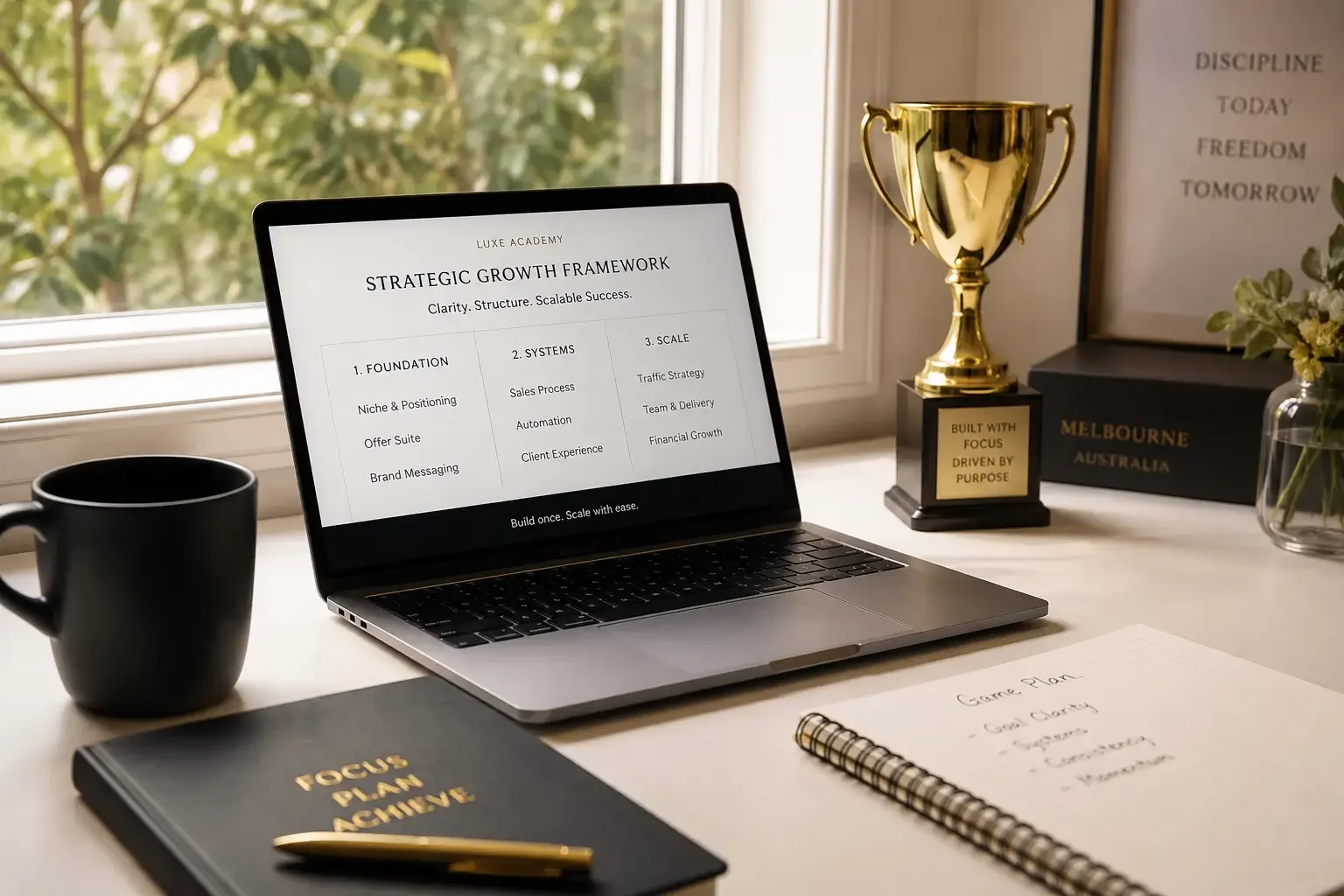
You've built something worth recognising. A product people genuinely love, a service that solves a real problem, or a business that's made a measurable difference in your community. But when you look at the stack of award entry forms sitting in your browser tabs, you close them. Again.
Award entries are painful. They're time-consuming, oddly formatted, and require you to write about yourself in ways that feel either boastful or awkward. So most small business owners skip them entirely — or fire off something rushed at 11pm the night before the deadline.
That's a problem, because awards are one of the most underused PR tools available to small businesses. "Award-winning" carries credibility. Shortlistings generate media hooks. Wins create content that works for months. And unlike pitching journalists cold, you're in control of the narrative from the start.
The good news is that AI can genuinely help with award entries — not by writing them for you, but by helping you structure, sharpen, and articulate the story you already have. Here's how to do it properly.
Why Award Entries Matter More Than You Think
Most small business owners think of awards in terms of trophies and gala dinners. That's the wrong frame.
Think of an award entry as a structured PR asset. Even a shortlisting gives you a press release hook, a social media story, a website badge, and a talking point for sales conversations. A win amplifies all of that and often generates genuine media coverage, particularly in industry trade publications and local press.
In the Australian market, award wins carry particular weight for building trust. Consumers and B2B buyers are sceptical by default, and third-party validation from a credible awards programme cuts through the noise in a way that self-promotional content simply can't.
The return on a well-written entry is disproportionate to the time invested — particularly when you use AI to compress that time investment significantly.
Why Most Award Entries Fail Before They're Read
Judges read hundreds of entries. They're volunteers, often working through submissions on weekends. An entry that makes their job harder gets scored down before a single word of your content registers.
The most common failure mode is what I call the "features parade" — a long list of what your product or service does, with no evidence of impact and no narrative thread. "We provide innovative solutions to our clients" is a sentence that appears, in some form, in probably 40% of award submissions. It says nothing.
The second killer is vague quantification. "We grew significantly last year" or "our customer satisfaction is excellent" tells a judge precisely nothing. Numbers matter. Percentages matter. Testimonials with specific outcomes matter.
The third problem is category mismatch. Entering the wrong category — usually because it sounds more prestigious — means your entry is being evaluated against criteria it wasn't designed for. Read the judging criteria word by word before you pick a category. The right category for you is the one where your evidence is strongest, not the one with the most impressive name.
Finding the Right Awards to Enter
Before you open an AI tool, spend thirty minutes finding the right targets. In Australia, credible award programmes for small businesses include the Telstra Best of Business Awards, the RCSA Excellence Awards (for professional services), the Australian Small Business Champion Awards, the AusMumpreneur Awards, industry association awards in your sector, and local council or chamber of commerce awards.
Industry-specific awards are often more valuable than general business awards because they signal credibility to the specific buyers you're trying to reach. A finalist badge from your industry association means more to a prospective client in your sector than a generic "best small business" accolade.
Check the eligibility criteria and judging weightings before investing time in an entry. Most programmes publish their assessment rubrics. If evidence of financial impact accounts for 30% of scoring and your numbers aren't strong, that programme may not be your best bet right now.
Budget roughly two to three hours for a quality entry, down from five to six without AI assistance. Some complex entries — particularly those requiring financial documentation, case studies, or supporting materials — will still take longer.
What AI Can and Can't Do for Your Award Entry
Let's be direct about the limitations before the workflow, because misunderstanding this is where people come unstuck.
AI cannot invent your story. It cannot fabricate metrics, generate testimonials, or create the evidence base your entry needs. If you don't have concrete outcomes to document, no amount of AI-assisted prose will win you an award from judges who've been doing this for years.
What AI is genuinely good at: restructuring your notes into a coherent narrative, suggesting language that's specific without being boastful, identifying where your evidence is weak (so you can fix it), helping you meet word counts without padding, and making sure you've actually answered the question asked.
The most useful thing AI does in this context is act as a structured thinking partner. It helps you get what's in your head onto the page in a form that's clear and compelling to someone who doesn't know your business.
The 90-Minute AI-Assisted Award Entry Workflow
This workflow assumes you have your raw evidence ready: revenue figures, customer numbers, testimonials, outcome data, timeline of milestones. Gathering that evidence is Step Zero, and no AI tool can skip it for you.
Step 1 — Read the criteria out loud (10 minutes)
Copy the judging criteria into a document. Read each criterion and write one or two bullet points of evidence you have for each one. This is the skeleton of your entry. If you can't find evidence for a criterion, make a note. Don't ignore gaps — judges notice them.
Step 2 — Brief the AI with context (15 minutes)
Open Claude or ChatGPT and use this prompt:
"I'm writing a business award entry for [Award Name], specifically the [Category Name] category. Here is a summary of my business: [2-3 sentences]. The judging criteria are: [paste criteria]. My key evidence points are: [paste your bullet points from Step 1]. Please help me structure a draft response for each criterion that is specific, evidence-led, and direct. Do not use corporate jargon or generic language. Flag any areas where my evidence seems weak."
The "flag weak areas" instruction is important. Most AI tools will try to fill gaps with filler language if you don't ask them to be honest about it.
Step 3 — Review the draft (15 minutes)
Read the AI's output critically. Ask yourself: does this sound like me? Does every claim have evidence behind it? Have I answered what was actually asked, or what I wished was asked? Edit ruthlessly. Remove anything vague.
Step 4 — Add your voice (20 minutes)
This is the step most people skip when they're time-pressured, and it shows. AI-drafted award entries often read as technically competent but personality-free. Add specific anecdotes. Reference real client names (with permission). Include a sentence that only you could write — something specific to your industry, your geography, or your particular approach.
Step 5 — Check the word count and refine (10 minutes)
If you're over the limit, use this prompt: "Please reduce the following section to [X words] without losing any specific evidence or data points. Cut adjectives and generalities first."
If you're under, ask: "Are there any points in the following that are underdeveloped or where additional context would strengthen the case?"
Step 6 — Read it as a judge (10 minutes)
Print it out or read it on a different screen. Ask yourself: if I knew nothing about this business and was reading fifty entries today, would this one stand out? Where does my attention drift? Fix those sections.
What a Strong Award Entry Actually Looks Like
The entries that win typically follow what's sometimes called the STAR structure — Situation, Task, Action, Result — even when it's not explicitly required.
They open with the context (what problem existed, what the market looked like, what gap they were filling). They describe the specific actions taken, not in general terms but with precise detail: dates, decisions, pivots, investments. They quantify outcomes: revenue growth percentages, customer retention rates, net promoter scores, media coverage, jobs created.
The best entries also include a "so what" — why this matters beyond the business itself. That might be community impact, industry innovation, or a contribution to workforce development. Judges respond to entries that situate individual business success in a broader context.
What Not to Do With AI for Award Entries
Don't use AI to write your entry from scratch without providing specific evidence first. You'll end up with something that reads like a marketing brochure and scores poorly.
Don't use the first draft as your submission. AI output requires human editing. Every time.
Don't let AI soften your members to avoid sounding boastful. If revenue grew 140%, say 140%. Judges reward specificity.
Don't use the same AI-generated entry verbatim across multiple awards programmes. Each programme has different criteria, different judges, and different weightings. An entry that's a 9/10 fit for one category is often a 4/10 for another.
And don't submit without getting someone else to read it. Your business manager, a trusted client, or a colleague who can tell you honestly whether the entry makes sense to someone unfamiliar with your business.
The Honest Cost Breakdown
A quality award entry using AI tools costs you time, not money — assuming you already have a Claude or ChatGPT subscription.
Claude Pro costs USD $20/month (roughly AUD $31). ChatGPT Plus is the same. Both are adequate for award entry drafting. You don't need enterprise tools for this task.
If you're entering multiple awards in a year, consider building a "master evidence document" — a running record of your metrics, milestones, testimonials, and outcomes. Each time you hit a milestone, add it to the document. When award season arrives, your evidence is already organised. This cuts Step Zero from an hour to fifteen minutes.
If you genuinely don't have time to do this yourself and an award win is strategically important to your business, a professional copywriter experienced in award entries typically charges AUD $500–$1,500 per entry. That's not cheap, but it's a fraction of what the PR value of a win can generate. An AI-assisted professional can often deliver the same quality at the lower end of that range.
When to Hire Help Instead
If your entry requires financial modelling, independent verification, or complex supporting documentation, get professional help. Some awards — particularly government or grant-linked programmes — have compliance requirements that need expertise.
If you've entered an award two or three times and not made the shortlist, and you genuinely believe your business deserves to, get a second opinion on your entry before spending more time on it. Sometimes the problem is the evidence. Sometimes it's the writing. Sometimes it's the category. It helps to have someone outside your business tell you which.
Key Takeaways
Business awards are an underused PR asset that generate credibility, media hooks, and sales content well beyond the ceremony itself.
The most common reasons entries fail are vague language, no quantified evidence, and entering the wrong category.
AI tools like Claude and ChatGPT are genuinely useful for structuring and sharpening award entries, but they need specific evidence from you to work with.
The 90-minute workflow above compresses a task most business owners avoid into something manageable: brief the AI with context and criteria, review and edit the draft, add your voice, then read it as a judge.
Build a master evidence document now so that when award season arrives, your data is already organised.
If you're looking for help articulating your business story across award entries, media pitches, and content, AI-Stories gives you access to professional-grade PR and content tools from AUD $29/month.